


Once reliant on large, upfront license fees for on-premises software, Microsoft partners are now navigating the transition to cloud-based solutions. Recurring monthly payments have replaced the big checks of the past, creating new challenges like increased competition, margin pressure, and the need to deliver higher gross profits from services. Such organizations often find themselves vying for the same deals within a crowded ecosystem, facing rising resource costs without a corresponding increase in billing rates.
In my work with Microsoft partners, I’ve seen firsthand how the SPI Research maturity model can guide firms toward profitable growth. This framework helps organizations move from breaking even at Level 2 to thriving at Level 5, where profitability can exceed 30%. For Microsoft partners adapting to cloud-first business models, following this path has been essential for staying competitive and driving sustainable growth. Let’s take a closer look at what this journey includes.
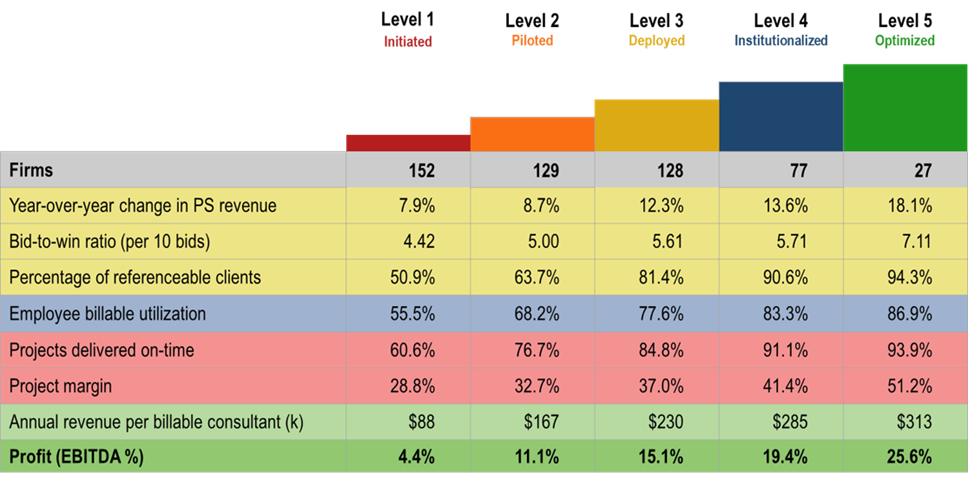
Professional Services Maturity Model™ by SPI Research
The SPI Research maturity model is a proven framework that categorizes professional services firms into five levels based on their operational and financial performance. Each level reflects an organization’s degree of maturity and capability:
To climb the maturity ladder, firms must align several critical areas of their business. In my experience, the most successful organizations focus on strengthening these four core pillars:
Reaching Level 5 maturity doesn’t happen overnight. Success comes from making steady, strategic improvements across every area of the business. Here’s how firms can move forward on this path:
Firms at Level 5 maturity are highly profitable, with valuations up to 10 times their revenue. They attract top talent and become trusted advisors to their clients. For Microsoft partners, achieving this level of maturity not only ensures profitability but also solidifies their position in an increasingly competitive market.
For more insights, check out this video: